Founder and CEO: Muhammad Salman Nasir is attending the CEATEC 2026 in...

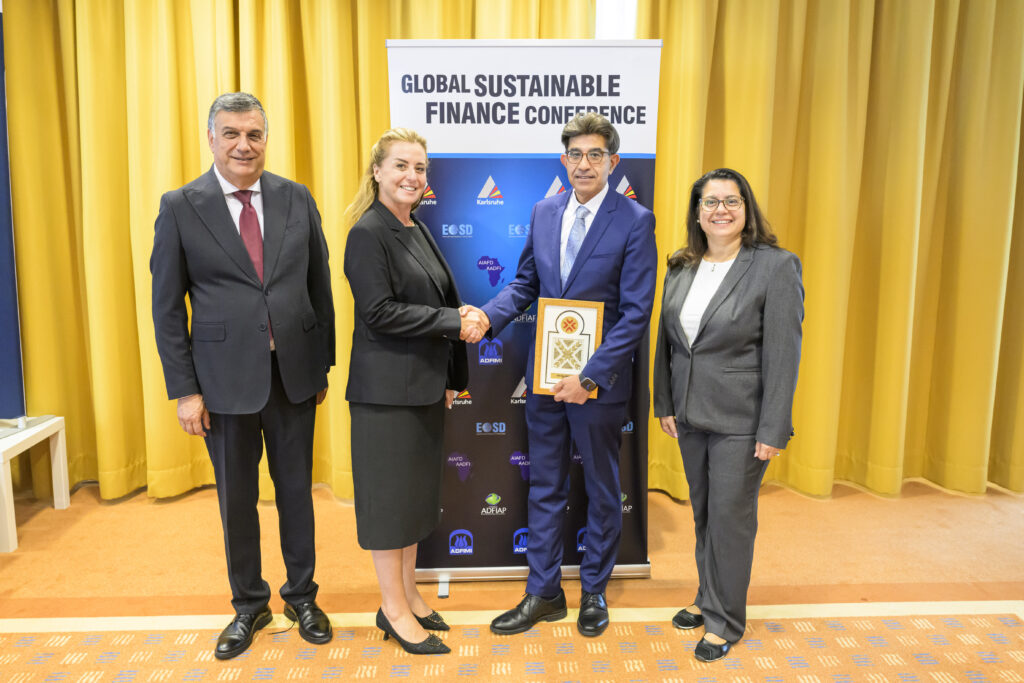
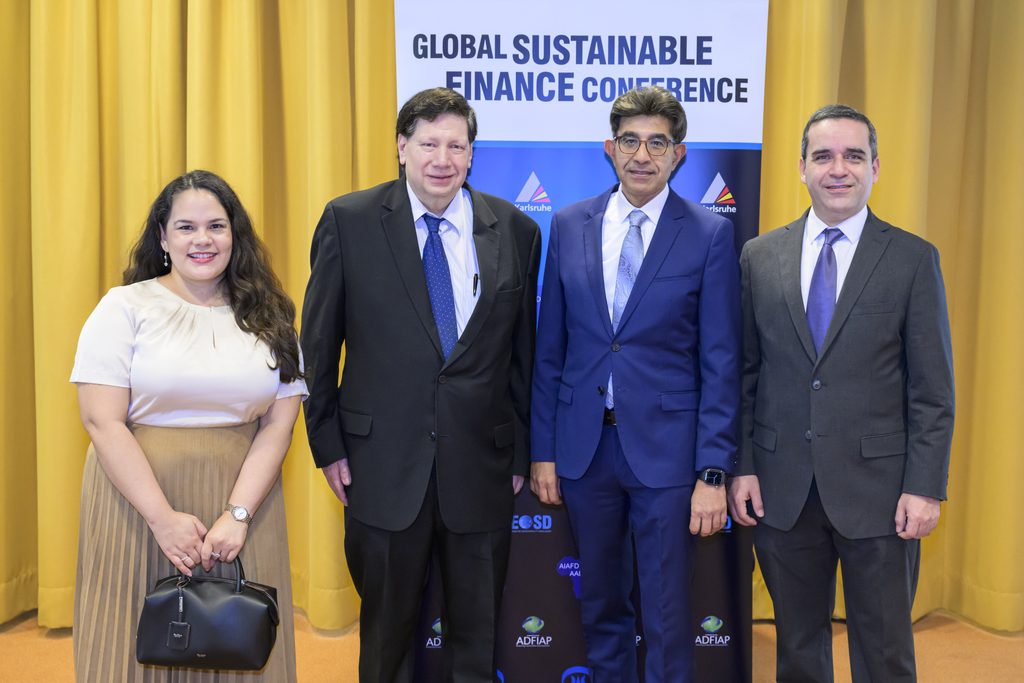
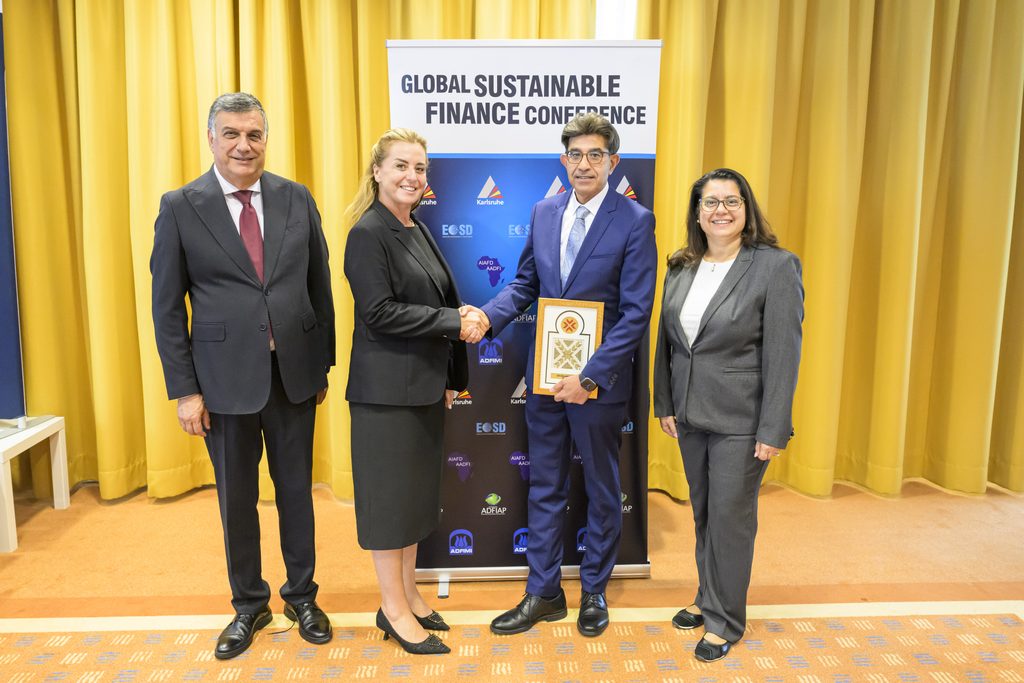
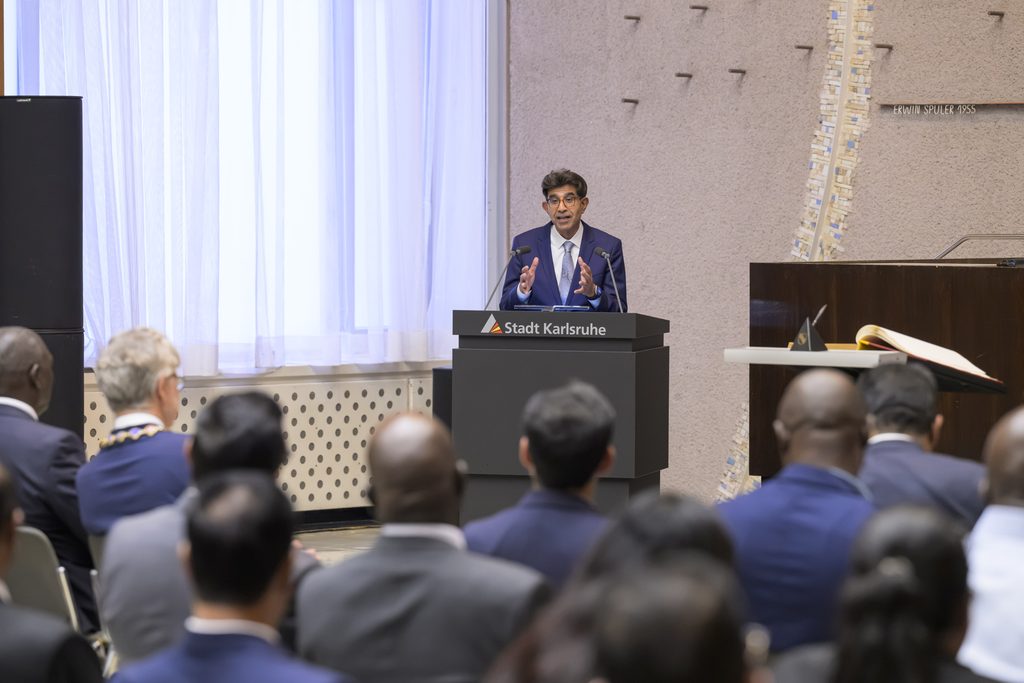
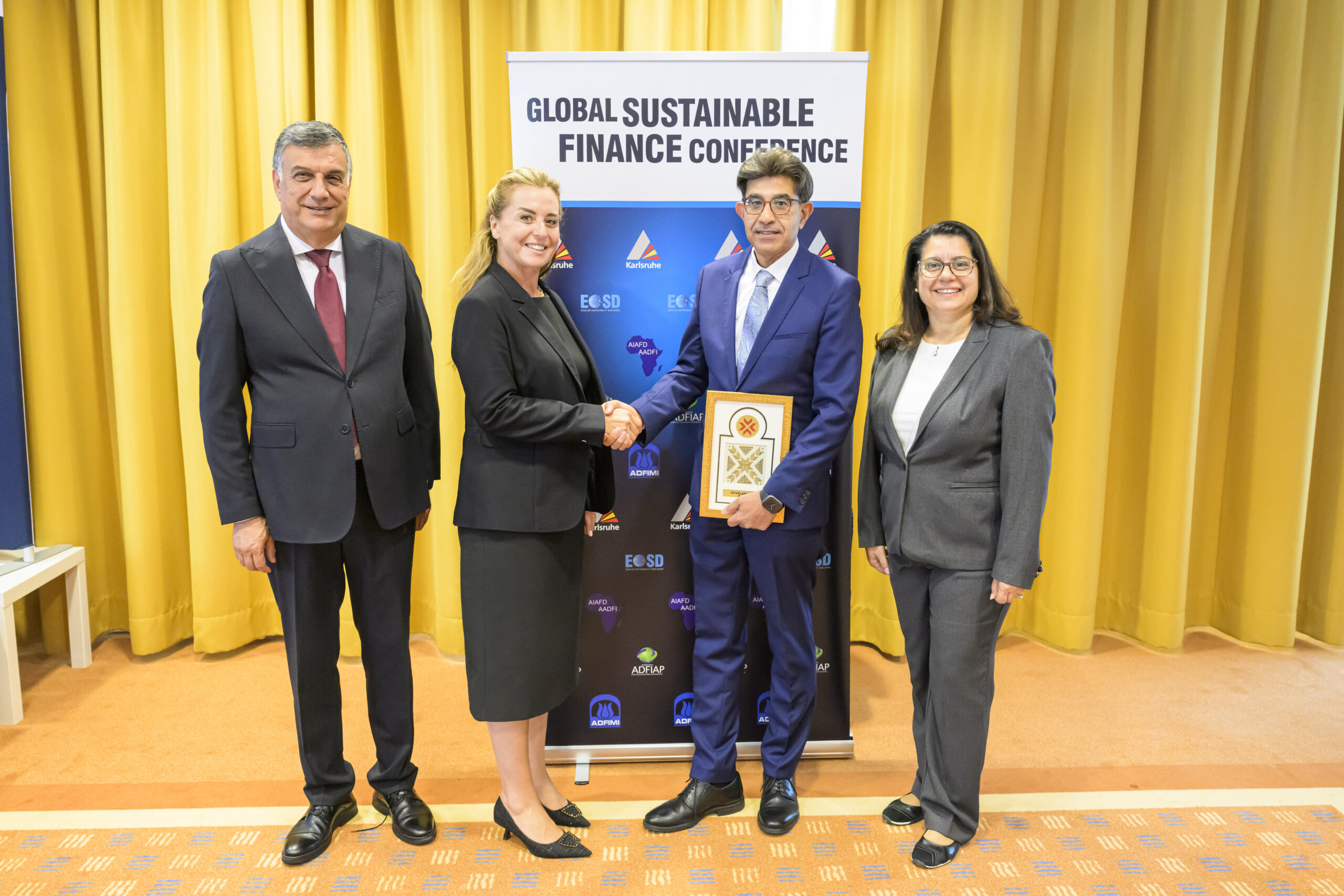
I had the opportunity to represent FPCCI at the Global Sustainable Finance Conference (GSFC) 2026, held on 27–28 August 2026 in Karlsruhe, Germany.
Organised by the European Organisation for Sustainable Development (EOSD), the Conference brought together senior representatives of central banks, commercial and development financial institutions, regulators, institutional investors, public authorities and the private sector. The theme, “Turning Global Disruption into Investment at Scale,” reflected a central question running throughout the Conference: how can countries and financial institutions turn a rapidly changing global economic environment into new investment, stronger institutions and economic opportunity?
My principal conclusion from GSFC 2026 is that its relevance to Pakistan extends considerably beyond individual sustainable projects.
Pakistan faces major requirements for investment in industry, technology, infrastructure, energy, agriculture, water, climate resilience and enterprise development. At the same time, businesses frequently face difficulty accessing the capital, technology and institutional support required to modernise and expand.
The discussions in Karlsruhe therefore raised a more fundamental issue:
Pakistan does not only need more capital. It needs stronger institutional capabilities to systematically identify, develop and structure the businesses, industries and investment opportunities into which domestic and international capital can flow.
For FPCCI, this presents an important opportunity. As the country’s apex representative body of trade and industry, FPCCI is well positioned to connect the needs and opportunities emerging from Pakistan’s business sectors with financial institutions, investors, policymakers and international partners.
I therefore recommend that FPCCI explore a structured engagement with EOSD around three areas of particular relevance to Pakistan: financial-sector institutional transformation through Sustainability Certification; systematic investment opportunity origination through RISE; and the mobilisation of capital towards competitive businesses, industries and new economic opportunities.
One of the strongest messages from Karlsruhe was that the global environment in which countries and businesses compete is changing rapidly.
Geopolitical realignment, technological breakthroughs, artificial intelligence, changing supply chains and intensifying competition for investment, industries and economic influence are reshaping markets and capital flows.
The response cannot simply be to protect existing economic structures. Disruption also creates new markets, industries and investment opportunities.
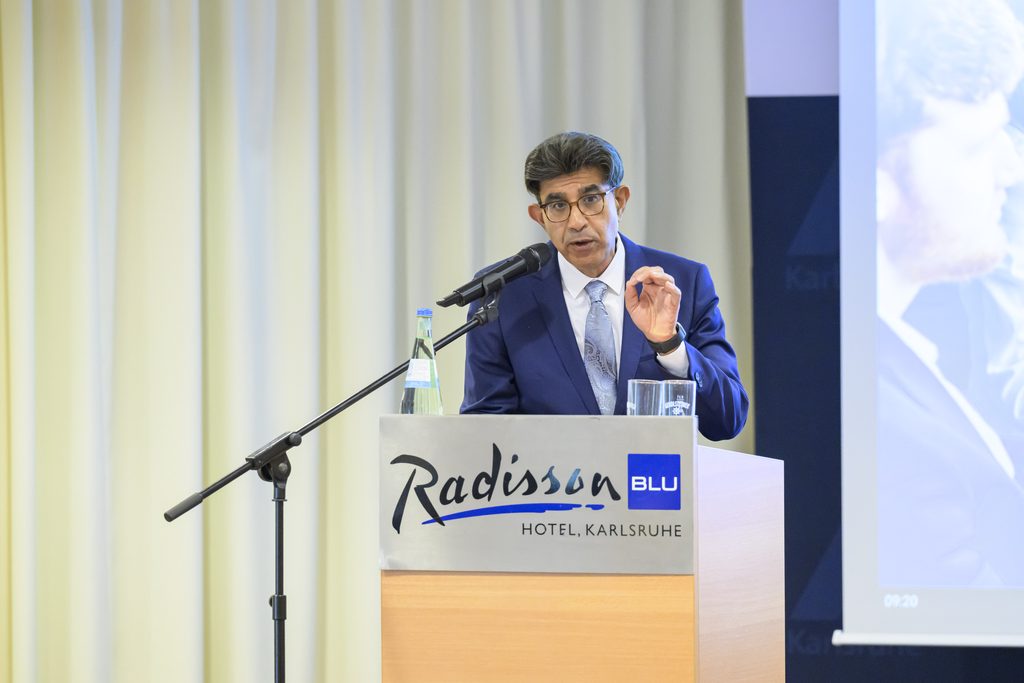
In his inaugural address, Mr Arshad Rab, CEO of EOSD and Chairman of the International Council of Sustainability Standards for Value-Driven Financial Institutions, challenged participants to reconsider a fundamental question underlying sustainable finance:
Where does money flow — and does it create value or destroy it?
This question has particular relevance for Pakistan.
An economy cannot become internationally competitive if businesses cannot finance machinery, technology, innovation and expansion, while capital continues to finance the import of goods that domestic industries could increasingly produce themselves.
The proposition emerging from the Conference was therefore not simply about increasing finance, but about changing what finance builds. One of the key messages from Mr Rab was the need to move:
“From financing dependency to building economic strength. This means moving beyond repeatedly financing the consequences of structural weaknesses and instead addressing their underlying causes.”
An important area deserving greater attention from Pakistan’s financial sector is EOSD’s Sustainability Standards and Certification Initiative (SSCI).
The Conference demonstrated that Sustainability Certification is not simply about introducing green products, ESG reporting or financing selected environmental projects. It represents a broader institutional transformation in which sustainability is embedded into the strategy, governance, business models, decision-making, capital allocation, products, operations and value creation of financial institutions.
This distinction is important.
Financial institutions occupy a central position between capital and the real economy. How they make decisions about where to lend, invest and allocate capital ultimately influences which businesses grow, which industries develop and what kind of economy emerges.
GSFC 2026 therefore challenged the conventional tendency to treat sustainability as an additional programme financed through grants, subsidised credit lines or external donor support.
As Mr Rab stated:
“Sustainability that cannot sustain itself is not sustainability.”
The Reserve Bank of Zimbabwe provided a significant institutional example during the Conference. Governor Dr John Mushayavanhu positioned the Bank’s Sustainability Certification journey within the central bank’s core mandate, while Deputy Governor Dr Jesimen Chipika highlighted the importance of moving sustainability beyond policies and reports into governance, decision-making and capital allocation.
For Pakistan, the relevance is significant. Engagement with Sustainability Certification could be explored with interested commercial banks, development finance institutions and other relevant financial-sector institutions seeking to strengthen their institutional capabilities and their contribution to long-term economic development.
Perhaps one of the most strategically relevant propositions for FPCCI was the discussion around RISE, an architecture developed by EOSD to transform economic challenges, market needs and national priorities into investable opportunities.
One of the central propositions advanced at GSFC 2026 was the need to rethink the conventional investment equation. As discussed at the Conference, countries frequently state that they require billions in investment, while investors simultaneously report difficulty finding sufficient viable opportunities in which to invest.
The Conference identified a critical missing capability as investment origination—the systematic identification, development and structuring of opportunities and the bringing together of the stakeholders required to move them towards investment readiness.
This thinking was captured powerfully by Mr Arshad Rab in his inaugural address:
“Build investment pipelines so powerful that they don’t look for capital. Capital looks for them.”
The Conference proposition therefore shifts the emphasis from primarily searching for capital towards building the institutional capability to systematically originate and develop investment opportunities capable of attracting it.
RISE is designed to address this gap.
Rather than financial institutions waiting for businesses or project developers to bring opportunities to them, RISE enables a more systematic approach to identifying, originating and developing the opportunities that economies need.
Uganda Development Bank provided one institutional example at GSFC 2026, explaining how it has embarked on RISE to strengthen its ability to originate investment opportunities aligned with Uganda’s economic ambitions.
For development finance institutions, Mr Rab framed the responsibility particularly clearly:
“Development finance should not merely finance what the market already understands. Its greatest value lies precisely in helping create the markets and industries that do not yet exist.”
The broader principle, however, extended across the financial system. As Mr Rab challenged delegates:
“Build investment pipelines so powerful that they don’t look for capital. Capital looks for them.”
This proposition has direct relevance to FPCCI.
FPCCI and its member chambers, associations and businesses possess something that financial institutions and international investors cannot easily reproduce: direct knowledge of Pakistan’s industries, businesses, markets, supply chains, constraints and emerging opportunities.
Across Pakistan, economic challenges themselves can potentially become sources of investment opportunity.
The Conference clearly framed economic challenges not only as problems to be financed, but as potential sources of new investment opportunities:
“Import dependence can reveal opportunities for domestic manufacturing. Industrial inefficiencies can create demand for new technologies. Agricultural constraints can generate opportunities in processing, storage, logistics and value addition. Energy and water challenges can stimulate new infrastructure and technology solutions. Digitalisation can create entirely new businesses and services.”
The strategic question is how these needs and possibilities are systematically identified and transformed into opportunities capable of attracting finance.
Applied to Pakistan, the architecture presented at GSFC 2026 points towards a stronger interface as follows:
“Pakistan’s business community → investment opportunity origination → financial institutions → domestic and international capital.”
FPCCI could potentially play an important convening and facilitation role within such an ecosystem, working with EOSD, financial institutions, relevant government bodies, sector associations and businesses.
Pakistan could begin building a systematic pipeline of new investment opportunities arising from its industrial priorities, market needs and economic challenges.
GSFC 2026 also challenged the assumption that economic transformation must depend primarily on attracting additional money from abroad.
Significant pools of capital already exist within economies through commercial banks, pension funds, insurance institutions, savings and other investors. The critical issue is how effectively this capital is mobilised towards opportunities capable of generating sustainable economic value.
The Conference highlighted an important relationship between financing businesses and strengthening the financial system itself.
When a financial institution finances a competitive enterprise, the result can extend beyond the original investment: suppliers gain business, employment and salaries are created, transactions increase, businesses expand and new deposits can ultimately enter the financial system.
As Mr Rab stated:
“You don’t need to wait for long-term deposits to build the economy. You build the economy to generate the deposits.”
For Pakistan, this suggests that discussions about capital mobilisation should extend beyond the question of attracting foreign investment. The country should simultaneously strengthen its capability to channel domestic and international capital towards competitive enterprises, industries, infrastructure and new markets.
The Conference also provided exposure to individual solutions with potential relevance to Pakistan.
Among those I explored were an Indonesian initiative involving the recovery of value from plastic waste, including potential conversion into fuel or other resource products, and an approach to glacial meltwater conservation and seasonal water storage for glacier-dependent communities.
Both areas have potential relevance to Pakistan and could merit further technical investigation. Any adaptation would naturally require independent environmental, technological, commercial and location-specific feasibility assessment.
These examples, however, also demonstrate the wider proposition of GSFC 2026: economic, environmental and social challenges should not only be viewed as problems requiring expenditure. With the right technologies, business models and financing structures, some can be transformed into new markets and investable opportunities.
Based on my participation at GSFC 2026, I believe the most valuable next step would be to move beyond a conventional post-conference exchange and explore whether a more structured relationship can be developed between FPCCI and EOSD.
Such an engagement could bring together FPCCI leadership and selected representatives of Pakistan’s financial sector, business community and relevant public institutions to examine where EOSD’s frameworks and international experience could contribute to Pakistan’s priorities.
The objective should not initially be to launch isolated projects.
It should be to identify where institutional capabilities can be strengthened so that Pakistan is better able to originate investment opportunities, mobilise capital, strengthen financial institutions and build more competitive businesses and industries.
This could ultimately provide a foundation for a wider Pakistan-focused initiative involving FPCCI, EOSD and interested national stakeholders.
Based on the above, I recommend that FPCCI:
1. Initiate a strategic dialogue with EOSD to explore a structured institutional relationship focused on investment origination, financial-sector transformation and business and industrial development in Pakistan.
2. Explore the potential application of RISE in Pakistan, particularly as an architecture for identifying and developing investment opportunities emerging from the needs, challenges and ambitions of Pakistan’s business and industrial sectors.
3. Facilitate engagement between EOSD and interested Pakistani financial institutions to examine Sustainability Certification and the institutional capabilities required for financial institutions to play a stronger role in economic transformation.
4. Consider convening a high-level Pakistan dialogue involving FPCCI, EOSD, selected financial institutions, business leaders and relevant public-sector stakeholders to identify priority sectors, structural challenges and opportunities capable of being developed into investable propositions.
5. Undertake further examination of selected practical solutions identified through GSFC 2026, including plastic-waste resource recovery and glacial meltwater conservation, where there is credible potential for adaptation to Pakistan.
6. Strengthen Pakistan’s strategic participation in future GSFC engagements, with representation extending across business, finance and relevant public institutions and with a stronger pipeline of Pakistani investment opportunities and institutional initiatives.
My participation in GSFC 2026 demonstrated that the most important opportunity for Pakistan is not to replicate individual projects from other countries.
It is to strengthen the institutional architecture through which Pakistan identifies opportunity, builds businesses and industries, mobilises capital and converts its economic challenges into sources of investment and growth.
Pakistan possesses a substantial business base, entrepreneurial capability, financial institutions, natural resources, a large domestic market and significant development needs. The challenge is to connect these assets more systematically.
For FPCCI, this creates an opportunity to play a role extending beyond representation and advocacy: helping bring together the business opportunities emerging from Pakistan’s economy with the institutions, finance, technology and international partnerships required to develop them.
GSFC 2026 therefore should not be viewed simply as a conference attended. It should be considered a starting point for exploring how FPCCI and EOSD can work together to turn Pakistan’s economic potential into investable opportunity—and investable opportunity into stronger businesses, industries and long-term economic prosperity.
Founder and CEO: Muhammad Salman Nasir is attending the CEATEC 2026 in...
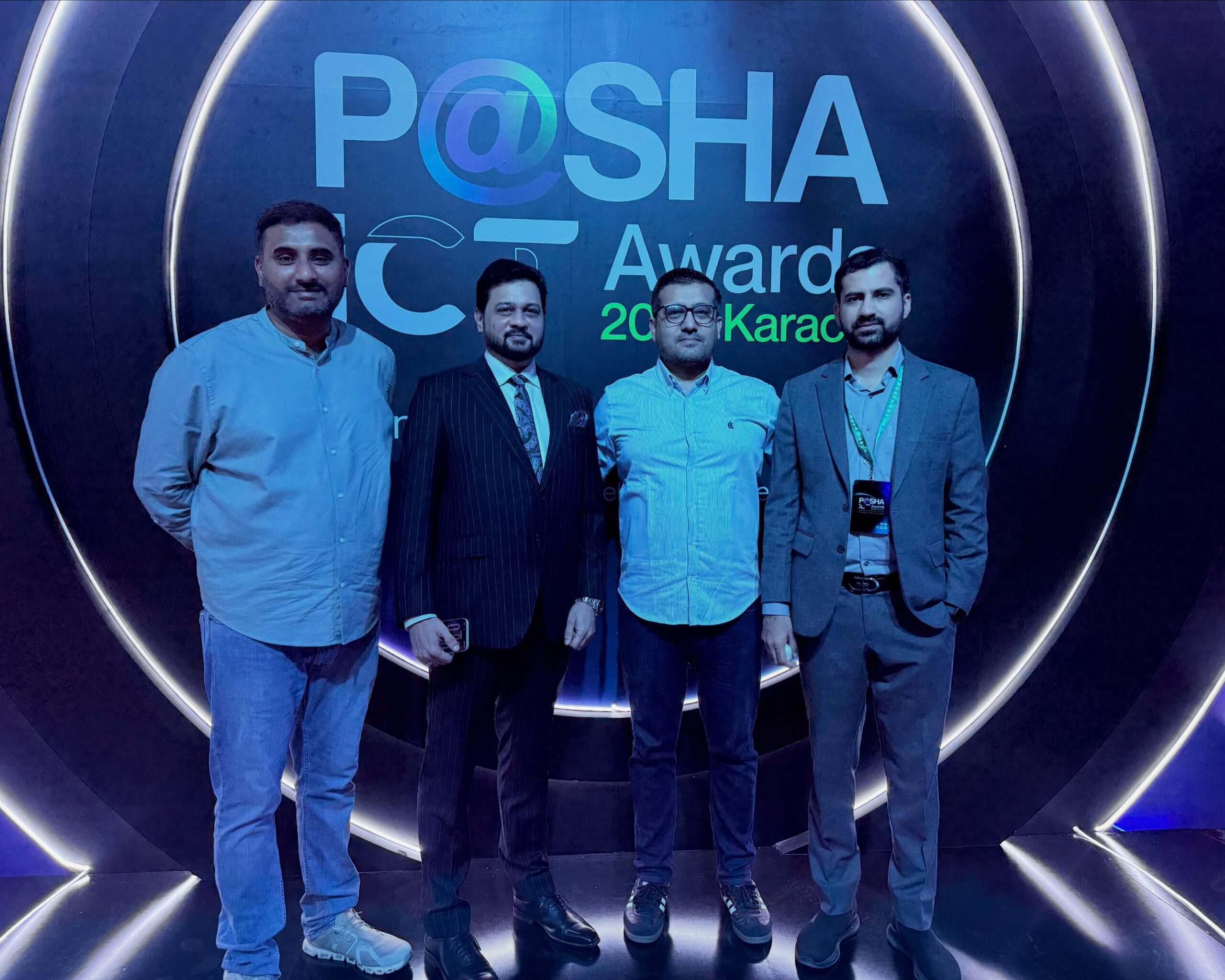
Karachi recently played host to one of the most anticipated nights on...
1. Executive Summary I had the opportunity to represent FPCCI at the...