An evening in Oslo with China’s innovators Some events give you information....

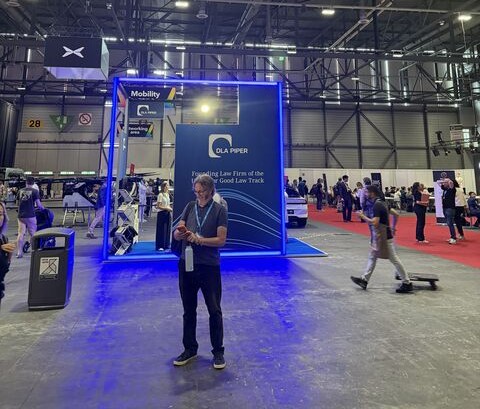
Artificial intelligence stopped being a “future conversation” a while ago — it is now the operating layer underneath healthcare, education, disaster response, and even culture. That shift was on full display at the AI for Good Global Summit 2026, held from 7 to 10 July 2026 at Geneva’s Palexpo convention centre, in what organisers called the seventh edition of the world’s largest UN-led gathering on artificial intelligence.
The event was hosted by the International Telecommunication Union (ITU), held in partnership with more than 50 UN sister agencies and co-convened with the Government of Switzerland. For four days, Geneva effectively became, as ITU itself put it, the world’s capital of AI — bringing together heads of state, global CEOs, researchers, startups, artists, and youth delegations under one roof.
If you shared the LinkedIn post or the event listing on aboutdigital.pk, here’s the fuller story behind it — what the summit was about, what actually happened, and why it matters even for those of us watching from Pakistan.
The AI for Good Global Summit 2026, led by ITU, set out to unlock AI’s potential to serve humanity through building skills and standards, and advancing partnerships to solve global challenges. This is not a typical trade show. AI for Good positions itself as a year-round, action-oriented UN platform rather than a one-off conference — the four days in Geneva are the physical peak of a much longer effort to connect AI innovators with the people and institutions who actually need AI solutions: governments, hospitals, disaster response agencies, and development organisations.
The 2026 edition ran under the theme “Unlocking AI’s potential to serve humanity,” organised around three broad pillars: AI standards for a better future, AI skills for everyone, and AI governance. Organisers described the 2026 edition as aiming to strengthen AI for Good’s role as a globally representative platform for dialogue, collaboration and implementation, with over 1,000 expected speakers, ranging from heads of state and global CEOs to leading researchers. AI for Good
Context matters here too. Today, 78% of companies worldwide are integrating AI into their operations — which is exactly why a summit like this has shifted from theoretical AI ethics talk to practical deployment: how do you scale AI responsibly once it’s already inside your supply chain, your clinic, or your classroom? AI for Good

The summit was held back-to-back with the inaugural Global Dialogue on AI Governance, convened by the United Nations General Assembly and facilitated by UN Secretary-General António Guterres — a strong signal that AI policy conversations are now being treated with the same seriousness as climate or trade negotiations. PR Newswire
On the sponsorship side, Gold Sponsors included the Ministry of Science and ICT of the Republic of Korea and the Ministry of Internal Affairs and Communications of Japan, with EY and John Wiley & Sons as Silver Sponsors, and networking and session partners spanning Google, Microsoft, Cisco, HP, Lenovo and TikTok. That mix of national governments and Big Tech at the same table is fairly unique to this event, and it’s part of why AI for Good gets described as a genuine crossroads rather than a vendor showcase. PR Newswire
Running in parallel, the ITU Kaleidoscope academic conference took place from 7 to 9 July under the theme “AI and frontier technologies for good,” bringing together academia, industry and government leaders to explore how emerging technologies can be developed and applied responsibly to tackle complex societal challenges, through paper presentations, keynotes and dedicated tracks. AI for Good
Across three stages, the Summit featured keynotes, expert discussions, workshops, and live demonstrations exploring how AI is shaping the future of work, advancing healthcare, transforming creativity and culture, supporting education and skills development, and opening new perspectives on longevity. geneve
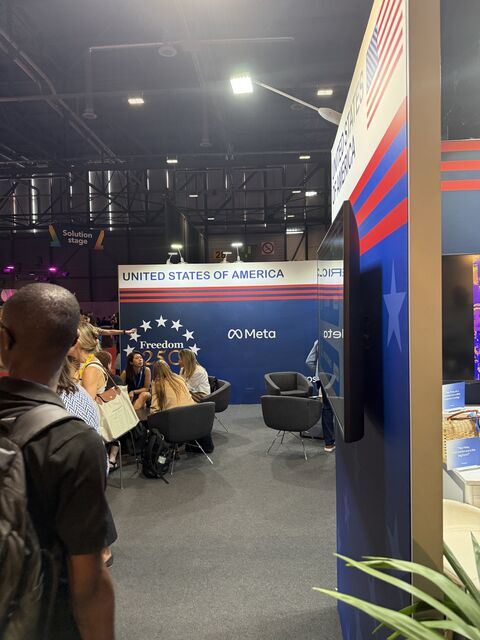
The exhibition floor was arguably the most talked-about part of the event. Visitors could explore cutting-edge technologies in AI, robotics, autonomous systems, brain-computer interfaces, and emerging quantum systems, with demonstrations including AI-powered search-and-rescue vehicles for crisis environments, advanced personalised health AI, humanoid robots built for real-world interaction, and self-driving autonomous cars. Beyond the hardware, there were also lighter, more experimental moments — creative showcases including live performances from AI-enabled living organisms and a robot playing a cello, alongside country pavilions where national delegations showed off their own AI ecosystems. genevegeneve
A few individual sessions stood out enough to make headlines on their own:
The summit’s closing day, held on 10 July, focused on women’s leadership, education, and human progress — a deliberate choice to end the event on themes of inclusion rather than pure technology spectacle. AI for Good
Unlike many closed-door policy conferences, AI for Good is explicitly designed to be public-facing. The Summit was open to all visitors and brought together policymakers, industry leaders, researchers, innovators, artists, and youth from around the world. geneve
Pricing reflected that inclusive intent, with different access tiers rather than a single flat ticket: entry was free for under-18s, CHF 25 for students, CHF 50 for a Discovery Pass, CHF 890 for a Gold Pass, and CHF 4,900 for a Leaders Pass. That spread — from a symbolic student fee to a five-figure-equivalent leadership pass — is fairly typical of how UN-affiliated summits fund themselves: corporate and government delegations effectively subsidise access for students, researchers, and civil society. geneve
The opportunity to exhibit remained open to startups, research labs, companies, and institutions right up to the event, which is why the exhibition floor ended up as diverse as it did — big national pavilions sitting next to early-stage startups from countries with far smaller AI budgets. AI for Good
It would be easy to read all this as a European tech spectacle with no direct relevance outside Geneva. But three things about AI for Good make it worth paying attention to from Pakistan specifically:
The AI for Good Global Summit 2026 confirmed something that’s been building for a couple of years now: AI conversations at the highest global level have moved past “what is AI” and into “who gets access to it, on what terms, and to solve which problems first.” Between Kurzweil’s remarks on human-AI merger, the indigenous-wisdom panel challenging how AI is built in the first place, and the very practical health-AI demos on the exhibition floor, Geneva in July 2026 captured both the excitement and the real tension in this moment of AI development.
For anyone in Pakistan’s digital, marketing, or tech policy space sharing this event online, the real story isn’t just “a big AI conference happened” — it’s that the rules, standards, and skills frameworks being discussed in rooms like Palexpo this July are the ones that will eventually shape what AI tools look like, and how they’re regulated, everywhere else too.
An evening in Oslo with China’s innovators Some events give you information....

Founder and CEO: Muhammad Salman Nasir is attending the CEATEC 2026 in...

Karachi recently played host to one of the most anticipated nights on...